How Party Dresses Manipulate Human Perception Without You Realizing
Wiki Article
How Party Dresses Manipulate Human Perception Without You Realizing
You think you choose a party dress to express yourself.
In reality, it’s the dress that expresses you — sometimes in ways you never intended.
Every shimmer, silhouette, and shade works like psychological code, quietly instructing people how to see you, how to feel about you, and even how to treat you. You believe you’re dressing for the occasion. The truth? You’re shaping perception — theirs and yours — before a single word leaves your mouth.
Let’s pull back the curtain on how party dresses manipulate human perception without you realizing.
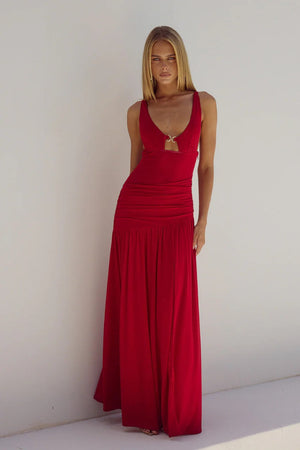
1. The Color Trap: When Emotions Wear Fabric
Color isn’t decoration — it’s emotional direction.
A crimson cocktail dress triggers passion and confidence; a deep emerald evokes trust; a soft blush whispers approachability. Your brain doesn’t analyze these effects — it reacts to them.
When someone walks into the room in red, everyone looks. Not because they choose to, but because the human eye is wired to prioritize red. Evolution made it the color of life, danger, and desire.
So that glittering red mini-dress? It’s not just “attention-grabbing.” It’s biological engineering in silk.
2. The Fit Illusion: Confidence as a Costume
Psychologists call it enclothed cognition — the theory that what you wear changes how you think, feel, and behave.
A fitted dress doesn’t just outline your body; it rewires your posture, your tone, your confidence. The reflection looking back at you tells your mind who you are — bold, composed, magnetic. And your mind obeys.
But perception cuts both ways. To others, that same confidence reads as control, charisma, or sometimes intimidation. The silhouette of a dress silently narrates your social rank before you even speak.
You think it’s fashion. It’s actually nonverbal persuasion.
3. The Texture of Touch: What Luxury Feels Like
The brain doesn’t separate visual and tactile cues. Velvet signals warmth and richness; satin whispers sophistication; sequins promise excitement. Even when people don’t touch the fabric, they imagine how it feels — and that imagined texture alters their emotional response.
A dress with a certain gleam tells the subconscious: This person is worth noticing.
That’s how perception is manipulated — through sensory suggestion.
4. The Light Game: How Movement Controls Memory
Party lights aren’t just atmosphere — they’re accomplices. Under warm light, gold tones radiate confidence. Under cool light, metallic silver conveys mystery.
Sequins, metallic threads, and flowing chiffon aren’t random fashion choices; they’re designed to catch light — and attention. The human brain is drawn to motion and sparkle. Every flicker of reflection pulls focus, making the wearer unforgettable.
It’s not vanity. It’s neuroscience.
5. The Social Mirror Effect
In any social gathering, perception spreads like contagion. If one person reacts to you with admiration, others subconsciously mirror it. Psychologists call it social proof.
Striking party dresses becomes a visual anchor for that reaction. You’re no longer one guest in the crowd — you’re the visual reference point. People adjust their energy around you without realizing it.
The manipulation isn’t malicious — it’s instinctive. Humans are wired to respond to status symbols, and in social settings, fashion is one of the loudest.
Report this wiki page